How Can Filipino Parents Teach Children Responsibility Without Shouting?
Minsan, kahit ayaw natin, napapasigaw talaga tayo sa mga anak natin — lalo na kapag umaga na, dapat aalis na papuntang school, pero hindi pa nakaayos ang bag, hindi pa nakasuot ang sapatos, o paulit-ulit na nating pinapaalala na ibalik ang gamit sa tamang lugar.
As parents, we know that these moments can be stressful. Pero deep inside, alam din natin na hindi shouting ang gusto nating matutunan ng mga anak natin. We want them to become responsible because they understand what responsibility means — not because they are afraid of us.
Many Filipino parents want to teach children responsibility without shouting, especially when daily routines, chores, school tasks, and screen time become stressful at home. The good news is that responsibility can be taught in a calmer, more consistent way.
Hindi ibig sabihin na kapag hindi tayo sumisigaw, wala na tayong disiplina. Calm parenting can still be firm. The goal is to guide children with routines, clear expectations, and steady consequences instead of fear, pressure, or constant anger.
Quick Answer: How can Filipino parents teach children responsibility without shouting?
Filipino parents can teach children responsibility without shouting by using consistent routines, age-appropriate chores, visual reminders, gentle but firm instructions, and family teamwork. Instead of nagging or raising your voice, focus on modeling responsible behavior, giving children simple tasks they can practice daily, and creating a home rhythm where responsibility feels normal and expected.
Children learn responsibility better when they know what to do, when to do it, and why it matters. Hindi kailangan perfect agad. What matters is consistency, patience, and giving them chances to practice.
Why shouting does not always teach responsibility
Shouting may get a child’s attention for a moment, but it does not always help them understand responsibility. Sometimes, children follow only because they are scared, not because they have learned the value of doing their part.
When shouting becomes the usual pattern, children may:
- become afraid to make mistakes
- tune out repeated reminders
- feel discouraged
- copy the same shouting behavior
- depend on anger before they act
- follow only when someone is watching
Of course, parents are human. Napapagod din tayo. May work, chores, bills, school requirements, traffic, and many other responsibilities. So this is not about blaming parents. This is about finding a calmer and more effective way to teach responsibility at home.
1. Start with simple, age-appropriate chores
One of the easiest ways to build responsibility is through small chores that match your child’s age. Hindi kailangan complicated agad.
For younger children, responsibility can start with simple tasks such as:
- putting slippers near the door
- placing toys back in the basket
- putting dirty clothes in the laundry basket
- helping arrange pillows
- bringing their plate to the sink
- packing simple school items with guidance
Kahit anim na taong gulang pa lang, a child can already practice small responsibilities with supervision. The task does not have to be perfect. The point is to help them build the habit.
For older kids, around seven to ten years old, you can assign tasks such as:
- preparing their baon container the night before
- feeding the family dog
- wiping the table after meals
- arranging school supplies
- folding small towels
- helping put away groceries
For teenagers, responsibilities can become bigger, such as:
- washing dishes
- doing their own laundry
- helping prepare simple meals
- managing their school schedule
- helping budget their weekly allowance
- keeping their room organized
The key is consistency, not perfection. Huwag munang asahan na magiging maayos agad ang pagkakagawa nila. Ang importante ay masanay silang gumawa, tumulong, at magkaroon ng sense of responsibility.
Praise their effort, not only the result. Instead of saying only, “Mali ang pagkakatupi mo,” you can say, “Thank you for helping. Let me show you how to fold it better next time.”
2. Use visual routines instead of constant verbal reminders
Isa sa mga dahilan kung bakit nauuwi sa sigaw ang parenting moments is because we keep repeating the same reminders verbally.
“Brush your teeth.”
“Fix your bag.”
“Put away your toys.”
“Get dressed.”
“Bilisan mo na.”
When reminders are repeated again and again, parents get frustrated and children may stop listening.
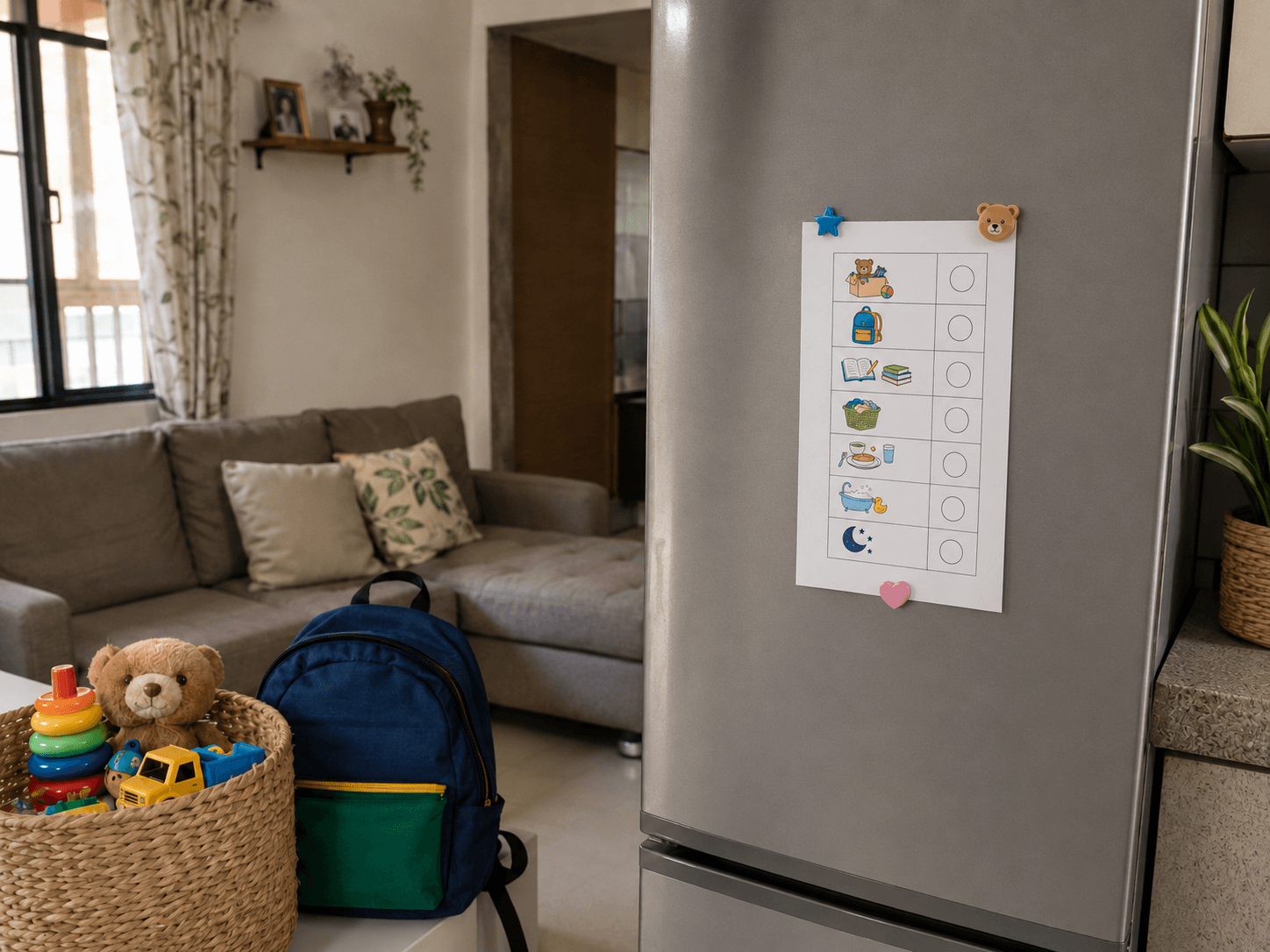
Instead of relying only on verbal reminders, try using a simple visual routine chart, especially for younger kids.
For example, for the morning school routine, you can make a checklist with simple words or drawings:
- wake up
- wash face
- eat breakfast
- brush teeth
- get dressed
- fix school bag
- wear socks and shoes
- wait near the door
You can place the chart on the refrigerator, bedroom wall, or near the door. Sa ganitong paraan, ang chart na ang “nagpapaalala,” hindi ikaw lagi ang paulit-ulit na nagsasabi.
You can also create an evening routine:
- change clothes
- eat merienda
- homework time
- pack school bag
- bath time
- story time
- bedtime
When children see the same routine every day, they slowly understand what comes next. This reduces the need for shouting because expectations become clearer.
3. Give gentle but firm reminders
There is a big difference between a calm reminder and repeated angry warnings.
Instead of saying:
“Ilang beses ko na bang sinabi sa’yo na ayusin mo ang gamit mo?!”
You can say:
“It’s time to put your things away before dinner.”
Or:
“Please fix your school bag now so we are ready for tomorrow.”
Simple. Clear. Walang sermon. Walang pananakot.
Gentle does not mean weak. You can speak calmly and still mean what you say. Children need to know that when you give an instruction, it matters.
For younger children, you can also use countdowns or timers:
“Ten minutes left before we leave. Please finish your playtime.”
“Five minutes more, then cleanup time.”
This gives them time to adjust instead of feeling suddenly pressured.
4. Use natural consequences instead of anger
When children do not follow, shouting is not the only option. You can use natural or logical consequences.
For example:
If toys are not packed away before bedtime, the toys can rest in a box and may not be used the next morning.
If the school bag is not prepared at night, the child may need to wake up earlier to fix it.
If dirty clothes are not placed in the laundry basket, they may not be washed in time.
The goal is not to shame the child. The goal is to help them understand that actions have consequences.
You can say:
“I know you wanted to play more, but cleanup is part of playtime. Since the toys were not packed away, we will keep them first and try again tomorrow.”
This teaches responsibility without making the child feel attacked.
5. Make responsibility part of the family culture
Responsibility is easier to teach when everyone in the family participates.
Sa maliit na bahay man o malaking bahay, children learn better when they see that everyone has a role. It should not feel like only one person is expected to help.
You can create a simple family cleanup routine. For example, every Saturday morning, do a 15-minute family cleanup:
- Tatay clears the living room.
- Nanay organizes the kitchen.
- Older kids arrange their room.
- Younger kids put toys in baskets.
- Everyone helps return items to their proper place.
This also teaches children that chores are not punishment. Chores are part of family life.
You can even make it light and fun:
- play music while cleaning
- use a timer
- give simple points
- let children choose one task
- reward the family with extra story time, a simple merienda, or movie time at home
Responsibility becomes more natural when children see it as teamwork.
6. Let children help even when it is slower
One reason parents do everything themselves is because it is faster. Totoo naman. Mas mabilis kung tayo na lang ang mag-aayos, magliligpit, o maghahanda.
But if we always do everything for our children, they miss the chance to practice.
Letting children help may take more time at first. The towels may not be folded perfectly. The toys may not be arranged neatly. The table may still need a second wipe.
That is okay.
Responsibility grows through practice. If we want children to become responsible later, we need to allow them to practice now.
You can say:
“Let’s do it together first.”
Then later:
“Now you try while I watch.”
Then eventually:
“You can do this on your own.”
This gradual approach helps children build confidence.
7. Be clear about expectations
Sometimes children do not follow because they do not fully understand what “clean your room” or “fix your things” means.
For adults, those instructions sound simple. But for children, they may feel too broad.
Instead of saying:
“Clean your room.”
Try saying:
“Put your books on the shelf, place your toys in the basket, and put your dirty clothes in the laundry.”
Instead of saying:
“Be responsible.”
Try saying:
“Before bedtime, your school bag should be ready, your uniform should be prepared, and your homework should be inside your folder.”
Clear instructions help children succeed.
Mas madaling sumunod ang bata kapag malinaw ang expectation.
8. Involve grandparents and other caregivers
In many Filipino homes, grandparents, titos, titas, or helpers are also involved in taking care of children.
If lolo and lola are part of the daily routine, it helps if everyone understands the same approach. Sometimes, grandparents show love by doing everything for the child. While this is understandable, it can make responsibility harder to teach.
You can gently explain:
“Ma, tinuturuan lang po namin siya na magligpit ng toys para masanay. Pwede niyo po siyang gabayan, pero hayaan po natin siyang siya ang gumawa.”
Encourage caregivers to guide the child, not always rescue the child from every task.
This keeps the message consistent: everyone in the family helps, and children can learn responsibility little by little.
9. Model the responsibility you want to see
Children learn more from what they see than what they hear.
If they see parents keeping promises, cleaning up, apologizing, preparing things ahead of time, and taking care of responsibilities, they begin to understand what responsibility looks like.
You can model simple actions:
- preparing work items the night before
- putting things back after using them
- saying sorry when you make a mistake
- paying attention to family routines
- speaking calmly when frustrated
- finishing tasks before leisure time
You do not need to be a perfect parent. Wala namang perfect. But when children see adults trying to be responsible too, the lesson becomes more real.
10. Encourage progress, not perfection
Teaching responsibility takes time. Children will forget. They will complain. They will need reminders. Some days will be easier than others.
That does not mean you are failing.
Instead of focusing only on what they missed, notice what they are improving.
Say things like:
- “Thank you for putting your toys away.”
- “I saw that you prepared your bag without being reminded.”
- “You remembered your chore today. Good job.”
- “I know you were tired, but you still helped.”
- “Let’s try again tomorrow.”
Encouragement helps children feel capable. When children feel capable, they are more likely to try again.
Responsibility is built through many small moments, not one big lecture.
Frequently Asked Questions
Can parents teach children responsibility without shouting?
Yes. Parents can teach children responsibility without shouting by using clear routines, age-appropriate chores, calm reminders, consistent consequences, and encouragement. Shouting may get quick attention, but calm and consistent guidance helps children understand responsibility better.
Paano ko simulan ang chores kung hindi pa sanay ang anak ko?
Magsimula sa isang simpleng gawain lamang and make it part of the daily routine. Ipakita muna kung paano ito gagawin, then let your child try while you supervise. Once they get used to it, you can slowly add more responsibility.
Ano ang gagawin kung palaging nakakalimutan ng anak ko ang tungkulin niya?
Use visual reminders such as a checklist, routine chart, or simple notes. You can also use a calm question like, “What do we do after dinner?” or “What is next on your checklist?” This helps them remember without feeling attacked.
Paano ko mapapanatili ang disiplina nang hindi sumisigaw?
Be consistent with rules, routines, and consequences. Calm discipline does not mean letting children do whatever they want. It means being steady, clear, and fair without using fear or constant shouting.
What chores are good for young children?
Young children can start with simple chores such as putting toys away, placing dirty clothes in the laundry basket, arranging slippers, wiping small spills, putting books back, or helping set the table with safe items.
What if my child refuses to do chores?
Stay calm and keep the expectation clear. You can offer limited choices, such as “Do you want to put away the books first or the toys first?” If they still refuse, use a simple consequence connected to the task, such as no next activity until cleanup is done.
What do you think?
Bawat pamilya ay may sariling paraan ng pagtuturo ng responsibility sa mga anak. Walang isang perfect formula na gumagana sa lahat.
Some children need more reminders. Some need more structure. Some respond better to visual charts, while others need more encouragement. What matters is that we keep guiding them with patience, consistency, and love.
If you have your own tips, routines, or experiences that helped your family, feel free to share them in the comments. Baka makatulong din ito sa ibang parents na nagsisikap araw-araw.
For more practical parenting articles, visit our Parenting Guides for Filipino Moms page.
You may also find more home routine tips in our Mom Life & Home section.

The Right Fitness Applications for Moms

What Do Geniuses Have In Common?
What Should Parents Put in a Healthy Baon for School Kids?
About Author

PinayMom
Margot is the voice behind PinayMom, where she shares practical parenting guides, mom-life tips, family reviews, seasonal Philippine guides, and family travel stories from a Filipino family perspective.