How Can Filipino Parents Prepare for Rainy Season School Days?
Rainy season school days in the Philippines can be stressful for many families. One day, everything is normal. The next day, biglang malakas ang ulan, traffic is heavier, shoes are wet, uniforms are harder to dry, and everyone is checking if classes are suspended.
For Filipino parents, tag-ulan is not just about bringing an umbrella. It also means preparing school bags, baon, uniforms, transportation, safety reminders, and backup plans when the weather suddenly changes.
The good news is that rainy season school days can become less stressful with a little preparation. Hindi kailangan perfect ang routine. What matters is having simple systems that help keep your child safe, dry, prepared, and calm during the school week.
Quick Answer: How can Filipino parents prepare for rainy season school days?
Filipino parents can prepare for rainy season school days by checking weather and school announcements, preparing rain gear, packing school bags the night before, planning baon that is safe and easy to eat, keeping extra clothes or towels ready, setting a morning routine, teaching children safety habits, and having a backup plan for class suspensions or sudden heavy rain.
A simple rainy-season routine can help reduce morning stress and make school days safer for children.
Why rainy season school preparation matters
During rainy season, even a simple school day can become more complicated. Heavy rain can affect transportation, school schedules, uniforms, shoes, baon, and children’s mood.
Parents may need to deal with:
- wet uniforms and shoes
- heavier traffic
- sudden class suspension announcements
- flooded streets
- slippery walkways
- delayed school service
- cold classrooms
- messy school bags
- children getting tired or uncomfortable
- meals or baon that need to stay safe
When parents prepare ahead, mornings become easier. Children also feel more secure because they know what to do when it rains.
1. Check weather and school announcements early
During rainy season, it helps to check updates before the school day begins.
Look at:
- official school announcements
- class group chats
- city or municipal advisories
- local government pages
- PAGASA weather updates
- trusted news sources
- school service updates
Avoid relying only on random screenshots or forwarded posts. Minsan mabilis kumalat ang “walang pasok” announcement, pero hindi pa pala official.
If the weather looks bad but there is no class suspension yet, use your judgment as a parent. Safety should always come first, especially if your area is flood-prone or travel is unsafe.
2. Prepare rain gear the night before
Rainy mornings can become chaotic if everyone is looking for umbrellas, raincoats, socks, or shoes at the last minute.
Prepare these the night before:
- umbrella
- raincoat
- extra socks
- towel or small face towel
- waterproof pouch
- slippers or backup footwear if allowed
- plastic bag for wet items
- school ID
- jacket or sweater
- water bottle
- lunch box
Place everything near the school bag or near the door. Para hindi na naghahanap kung kailan paalis na.
For younger kids, label their things clearly. Umbrellas, towels, raincoats, and lunch boxes can easily get mixed up at school.
3. Use a waterproof or rain-ready school bag system
A school bag can get wet quickly during heavy rain, especially if children walk from the gate to the classroom or ride public transportation.
Simple ways to protect school items:
- use a bag rain cover if available
- place books and notebooks in a plastic envelope
- use a waterproof pouch for important papers
- put extra clothes in a separate plastic bag
- keep gadgets or tablets inside a padded waterproof pouch
- pack food containers tightly
- separate wet items from books
Kung walang bag cover, even a clean plastic envelope or reusable waterproof pouch can help protect important school papers.
Teach your child to close the bag properly after getting things. Sometimes, notebooks get wet not because of the rain outside, but because the bag was left open.
4. Prepare uniforms and shoes ahead of time
One of the biggest rainy-season struggles is drying uniforms and shoes.
To make mornings easier:
- prepare uniforms the night before
- keep extra socks ready
- rotate shoes if possible
- dry wet shoes properly
- keep a small towel near the door
- prepare a backup jacket or sweater
- check if the school allows rain boots or slippers during heavy rain
If your child’s shoes get wet, dry them as soon as possible. Stuffing clean paper inside can help absorb moisture, but replace it when it becomes damp.
Hindi kailangan marami ang gamit. But having even one extra pair of socks and a backup towel can already help a lot.
5. Pack baon that is safe and easy to eat
Rainy days can affect baon too. Children may have shorter eating time, colder classrooms, delayed breaks, or longer travel time.
Choose baon that is:
- easy to open
- not too messy
- safe to pack
- filling
- something your child will actually eat
- packed in a secure container
Good rainy-season baon ideas include:
- rice with egg or chicken
- tuna or egg sandwich
- pandesal with filling
- pasta with protein
- banana
- apple slices
- crackers with cheese
- boiled saba
- warm soup in a proper insulated container, if your child can handle it safely
Avoid food that spoils quickly if there is no cooling option. Make sure water bottles and lunch containers are cleaned daily.
For more baon ideas, visit our guide on What Should Parents Put in a Healthy Baon for School Kids?.
6. Create a smoother rainy-day morning routine
Rainy mornings often take longer. Children may move slower, transportation may be delayed, and parents may need extra time to check announcements.
A simple morning routine can help:
- wake up a little earlier during rainy days
- check announcements first
- prepare breakfast
- confirm school service or transportation
- check umbrella and rain gear
- make sure the school bag is protected
- remind children about safety
- leave earlier if needed
For younger children, a visual checklist can help:
- eat breakfast
- brush teeth
- wear uniform
- pack bag
- get umbrella
- wear shoes
- bring baon
- wait near the door
This reduces repeated reminders and shouting. Mas calm ang morning kapag alam ng bata ang next step.
7. Teach children rainy-day safety habits
Children need simple safety reminders they can remember.
Teach them to:
- avoid stepping into floodwater
- walk slowly on wet floors
- hold the umbrella properly
- stay away from open drainage areas
- avoid running in corridors
- keep their bag closed
- wait in safe areas during pickup
- follow teacher or school instructions
- never go home with someone not approved by parents
- tell an adult if they are wet, cold, or uncomfortable
For younger kids, repeat these reminders gently. Do not assume they already know what to do.
You can say:
“Kapag malakas ang ulan, stay near your teacher and wait for us sa pickup area.”
Simple instructions are easier for children to remember.
8. Have a pickup and transportation backup plan
Rainy days can cause delays. School service may arrive late. Roads may flood. Parents may be stuck at work. Communication can become harder.
Prepare a backup plan:
- Who will pick up the child if you cannot?
- Does the school know the authorized pickup person?
- Is the school service contact saved?
- Does your child know where to wait?
- Does your child know not to leave the school area alone?
- Do grandparents or caregivers know the plan?
- Is your phone charged before dismissal time?
If your child is old enough to communicate, teach them what to do if pickup is delayed.
For example:
“Stay inside the school waiting area. Do not go outside the gate. Wait for our call or message.”
Safety muna, especially during heavy rain and traffic.
9. Prepare for possible class suspensions
During rainy season, class suspensions can happen suddenly. Sometimes announcements come early. Sometimes they come after families have already prepared for school.
Keep a simple home plan for suspension days.
Your plan may include:
- checking official announcements
- adjusting meals or baon
- setting a simple home routine
- doing light school review
- preparing indoor activities
- giving children simple chores
- managing screen time
- preparing school things for the next day
For a full guide, read What Should Filipino Parents Do When Classes Are Suspended Because of Rain?.
10. Keep rainy-day activities ready at home
If classes are suspended or children come home early, it helps to have indoor activities ready.
Simple activities include:
- coloring
- reading
- storytelling
- puzzles
- board games
- drawing
- pretend play
- folding clothes together
- helping prepare merienda
- indoor treasure hunt
- simple science experiments
- paper crafts
You do not need expensive materials. Old paper, crayons, books, blocks, and recycled boxes can already keep kids busy.
For more ideas, visit What Indoor Activities Can Filipino Moms Do With Kids During the Rainy Season? 8 Fun Ideas.
11. Keep a small rainy-season school kit
A simple rainy-season kit can make school days easier.
You can prepare:
- small towel
- extra socks
- plastic bag for wet items
- alcohol or hand sanitizer
- tissue
- small comb
- extra face mask if needed
- waterproof pouch
- small snack
- copy of emergency contact details
For younger children, keep the kit simple and lightweight. For older children, teach them when and how to use it.
Hindi kailangan marami. The kit should be useful, not heavy.
12. Prepare emotionally too
Rainy school days can be tiring for children. They may feel sleepy, cold, irritated, or disappointed when outdoor play is cancelled.
Parents can help by staying calm and giving reassurance.
You can say:
“I know rainy days can be tiring. Let’s prepare together so your day is easier.”
Or:
“If classes are suspended, we will follow our rainy-day routine at home.”
Children feel safer when parents explain what is happening in a calm way.
Rainy season school day checklist for parents
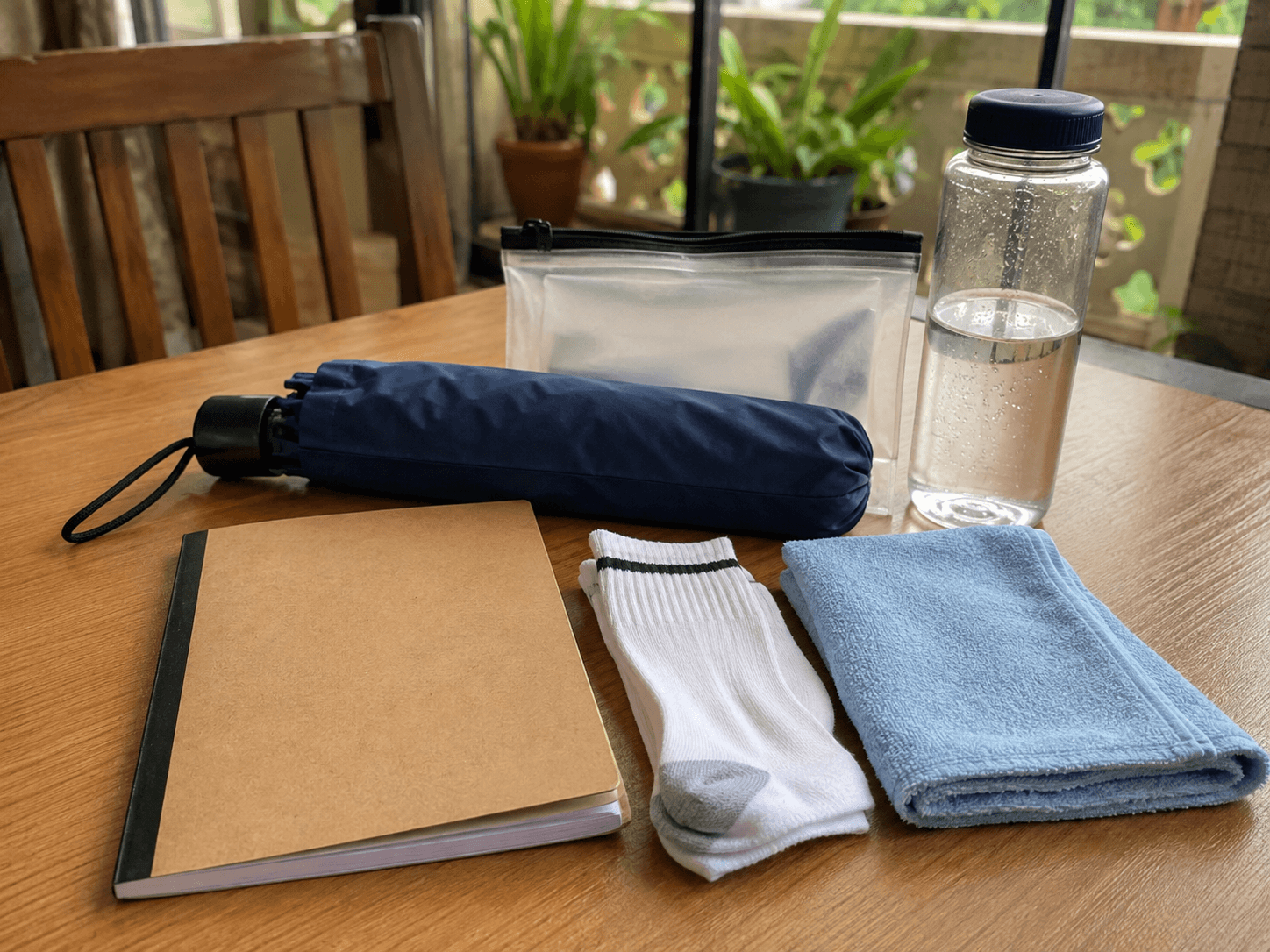
Use this quick checklist before school:
- Check weather and school announcements.
- Prepare umbrella or raincoat.
- Pack extra socks or small towel.
- Protect notebooks and papers.
- Prepare safe and easy baon.
- Check water bottle and lunch box.
- Confirm school service or transportation.
- Remind your child about rainy-day safety.
- Prepare pickup backup plan.
- Check updates again before leaving.
Kahit hindi perfect ang preparation, these small steps can make the school day smoother.
Frequently Asked Questions
What should children bring to school during rainy season?
Children should bring an umbrella or raincoat, extra socks, a small towel, water bottle, secure lunch box, and a plastic bag for wet items. If allowed, they may also bring a jacket or sweater.
How can parents keep school bags dry during rainy days?
Parents can use a bag rain cover, waterproof pouch, plastic envelope, or separate bag for notebooks and important papers. It also helps to teach children to close their bags properly.
What is a good baon during rainy season?
Good rainy-season baon should be filling, safe to pack, and easy to eat. Rice with egg or chicken, sandwiches, pasta, banana, crackers with cheese, and water are practical options. Avoid food that spoils easily if there is no cooling option.
What should parents do if classes are suddenly suspended?
First, confirm the announcement from official sources. Then check safety conditions, adjust meals or baon, create a simple home routine, prepare indoor activities, and monitor school updates.
How can parents reduce rainy-day morning stress?
Prepare school bags, uniforms, rain gear, baon items, and water bottles the night before. Wake up a little earlier, check announcements first, and use a simple checklist so children know what to do.
Should parents send children to school if there is no suspension but the weather is bad?
Parents should consider safety, road conditions, flooding, travel risk, and their child’s situation. If travel is unsafe, parents may contact the school and make the best safety decision for their family.
Final Thoughts
Rainy season school days can be unpredictable, but they do not have to be overwhelming. With simple preparation, Filipino parents can help children stay safer, drier, and more ready for school even during tag-ulan.
Prepare rain gear the night before. Protect school bags. Plan baon. Teach safety habits. Watch for announcements. Keep a backup plan ready.
Hindi kailangan perfect. Little by little, a simple rainy-season school routine can make mornings calmer and school days easier for the whole family.
For more practical parenting articles, visit our Parenting Guides for Filipino Moms page.
You may also find helpful home routine tips in our Mom Life & Home Guides for Filipino Moms page.
For more local rainy-season and family safety topics, visit our Philippine Seasonal Guides section.
Mang Inasal Laguna Bel Air Contact Number

The Wealthiest Women In Technology
World Bazaar Festival December 2019
About Author

PinayMom
Margot is the voice behind PinayMom, where she shares practical parenting guides, mom-life tips, family reviews, seasonal Philippine guides, and family travel stories from a Filipino family perspective.