How Do I Choose Safe Toys for My Child?
Choosing toys for children can be exciting, especially when we want to give them something fun, educational, and meaningful. But for parents, toy shopping also comes with an important question: “Is this toy safe for my child?”
In the Philippines, many parents buy toys from malls, toy stores, online shops, tiangge stalls, pasalubong stores, and big shopping platforms. Some toys look cute, trendy, or educational, but not all of them are safe or appropriate for every age. Minsan mura nga, pero delikado pala.
The best toy is not only fun. It should also be safe, age-appropriate, durable, easy to clean, and suitable for your child’s stage of development.
Hindi kailangan sobrang mahal ang toy. What matters most is that it is safe, useful, and bagay sa edad at ugali ng anak mo.
Quick Answer: How do I choose safe toys for my child?
Parents can choose safe toys by checking the age label, avoiding small parts for children under 3, inspecting for sharp edges or loose pieces, checking battery compartments, avoiding loose magnets, reading warning labels, and buying from reputable sellers.
Safe toys should match the child’s age, ability, and behavior. When in doubt, choose simpler, sturdier toys and supervise play. Safety muna bago cute, mura, or trending.
Why toy safety matters
Toys help children learn, imagine, move, explore, and build skills. But unsafe toys can cause accidents such as choking, cuts, falls, poisoning risks, battery injuries, or magnet ingestion.
Young children are especially vulnerable because they often:
- put toys in their mouth
- pull or bite small parts
- throw toys
- step on toys
- play without understanding danger
- copy older siblings
- use toys in unexpected ways
This is why parents need to check toys carefully before buying and continue checking them after use. A toy that was safe when new can become unsafe if it breaks, cracks, rusts, or loses small parts.
Sayang man tingnan, if the toy becomes unsafe, it is better to remove it than risk an accident.
1. Check the age label first
The age label is one of the most important things to check when buying a toy.
Age labels are not only about whether a child will enjoy the toy. They also help parents understand if the toy is safe for a child’s age and development.
For example, a toy labeled for children 3 years old and above may have smaller pieces that are not safe for toddlers. A toy for older children may also require better hand control, reading ability, or closer supervision.
In the Philippines, the FDA reminds parents and guardians to pay attention to toy labels because they provide safety and compliance information. Toy labels should include details such as age grading, warnings, instructions, manufacturer or local company information, and other product details.
Parent tip:
If your child is younger than the recommended age on the label, do not buy the toy yet. Kahit gustong-gusto niya, safety muna.
2. Avoid small parts for babies and toddlers
Small parts are one of the biggest toy safety concerns for young children.
For children under 3 years old, avoid toys with small detachable parts such as:
- tiny wheels
- small buttons
- beads
- marbles
- small eyes or noses from stuffed toys
- tiny building pieces
- removable caps
- small accessories
- loose squeakers
Young children may put these pieces in their mouth, nose, or ears. This can become a choking or ingestion hazard.
The U.S. Consumer Product Safety Commission explains that small parts rules are meant to help prevent children under 3 from choking, inhaling, or swallowing small objects.
Parent tip:
If a toy piece looks small enough to fit inside a child’s mouth, be extra careful. For toddlers, bigger and simpler toys are usually safer. Mas okay na simple kaysa risky.
3. Check for sharp edges, rough parts, or weak construction
Before buying a toy, inspect it carefully.
Check for:
- sharp edges
- pointed corners
- rough plastic
- splinters on wooden toys
- loose screws
- weak seams
- cracked parts
- peeling paint
- parts that easily detach
- thin plastic that can break quickly
Some toys look nice in pictures but feel flimsy in person. This is especially important when buying from online sellers because photos may not show the actual quality.
Parent tip:
When the toy arrives, inspect it before giving it to your child. Kung mukhang madaling mabali, matalas, or poorly made, do not let your child play with it.
4. Be careful with button batteries
Toys with lights, sounds, or music often use batteries. These can be fun, but battery safety is very important.
Check that the battery compartment is secure and cannot be opened easily by a child. It should usually require a screw or tool to open.
Be extra careful with small button batteries or coin batteries. If swallowed, they can be very dangerous.
Before giving a battery-operated toy to your child, check:
- Is the battery cover secure?
- Is there a screw holding it closed?
- Are there loose batteries inside the package?
- Is the toy cracked or easy to open?
- Can your child remove the battery cover?
Parent tip:
If the battery compartment is loose, broken, or missing a screw, do not use the toy. Itago rin nang maayos ang spare batteries. They should never be within a child’s reach.
5. Avoid loose or powerful magnets
Magnets can be dangerous if swallowed, especially if more than one magnet is swallowed. They can attract each other inside the body and cause serious injury.
Be careful with:
- magnetic balls
- magnetic building sets
- magnetic letters with loose magnets
- toys with small magnets that can fall out
- cheap magnetic toys with weak seams
Some magnetic toys are meant for older children and should not be given to toddlers or young kids.
Parent tip:
If a toy has magnets, check that they are securely enclosed and cannot come loose. If a magnet falls out, remove the toy immediately. Huwag na munang ipalaro “just for now” if a magnet is missing or loose.
6. Choose washable and non-toxic materials when possible
Children touch toys often, and younger children may put them in their mouth. Choose toys that are easy to clean and made from child-safe materials.
Look for labels such as:
- non-toxic
- washable
- child-safe paint
- BPA-free, when relevant
- washable fabric for stuffed toys
For art materials, choose products made for children, such as washable markers, non-toxic crayons, and child-safe dough.
Parent tip:
Avoid toys with a strong chemical smell, peeling paint, or unknown materials. Kapag amoy kemikal or parang madaling matuklap ang pintura, better to skip it.
7. Buy from reputable sellers
Many Filipino parents buy toys online because it is convenient and often cheaper. Okay lang naman bumili online, but be careful with unknown sellers, fake brands, poor-quality products, and toys without proper labels.
Before buying online, check:
- seller rating
- real customer reviews
- product size
- age recommendation
- safety warnings
- actual buyer photos
- return policy
- brand or manufacturer information
- whether the toy has small parts
Avoid buying toys only because they are trending or very cheap. Minsan, hindi sulit kung unsafe naman.
Parent tip:
Read negative reviews too. They often reveal issues like “madaling masira,” “may maliit na parts,” “sharp edges,” “amoy plastic,” or “loose ang battery cover.”
8. Match the toy to your child’s behavior, not just age
Age labels are helpful, but you also know your child’s behavior.
Some children still put objects in their mouth even after age 3. Some are very active and may throw toys. Some children have younger siblings at home who may accidentally access toys meant for older kids.
Ask yourself:
- Does my child still put toys in their mouth?
- Does my child throw or bang toys?
- Are there younger siblings at home?
- Can my child follow safety instructions?
- Will this toy need close supervision?
- Can this toy break into small pieces?
A toy may be labeled for your child’s age, but if it does not match your child’s behavior or your home situation, it may not be the best choice yet.
Parent tip:
If you have a toddler and an older child, keep the older child’s small toys in a separate container or higher shelf. Kasi kahit hindi para sa toddler ang toy, pwede pa rin niyang makuha kung abot niya.
9. Check toys regularly after buying
Toy safety does not stop after purchase.
Children play roughly. Toys can crack, tear, rust, loosen, or lose small pieces over time. That is why parents should periodically check toys for breakage or possible hazards.
Check regularly for:
- broken plastic
- loose parts
- exposed wires
- missing battery covers
- loose magnets
- rusty metal
- torn stuffed toys
- sharp wooden edges
- dirty or moldy toys
Parent tip:
Do a quick toy check during cleanup day. If a toy is broken and unsafe, remove it right away. Huwag panghinayangan kung delikado na.
10. Store toys safely
Safe storage is also part of toy safety.
Toys left on the floor can cause trips and falls. Small parts can also get mixed with toys for younger children.
Simple toy storage ideas:
- baskets for toddler toys
- separate boxes for small pieces
- higher shelves for older kids’ toys
- labels for toy categories
- regular decluttering
- keeping outdoor toys dry after use
If you use a toy box, make sure the lid is safe and will not suddenly fall on a child’s hand or head. Avoid heavy lids that can trap or injure a child.
Parent tip:
Teach children to pack away toys after playtime. This is not only for cleanliness, but also for safety. Mas safe ang bahay kapag hindi kalat ang toys sa sahig.
Safe toy ideas by age
Here is a simple guide for parents. Always follow the actual product label and your child’s readiness.
| Age | Safer toy ideas |
|---|---|
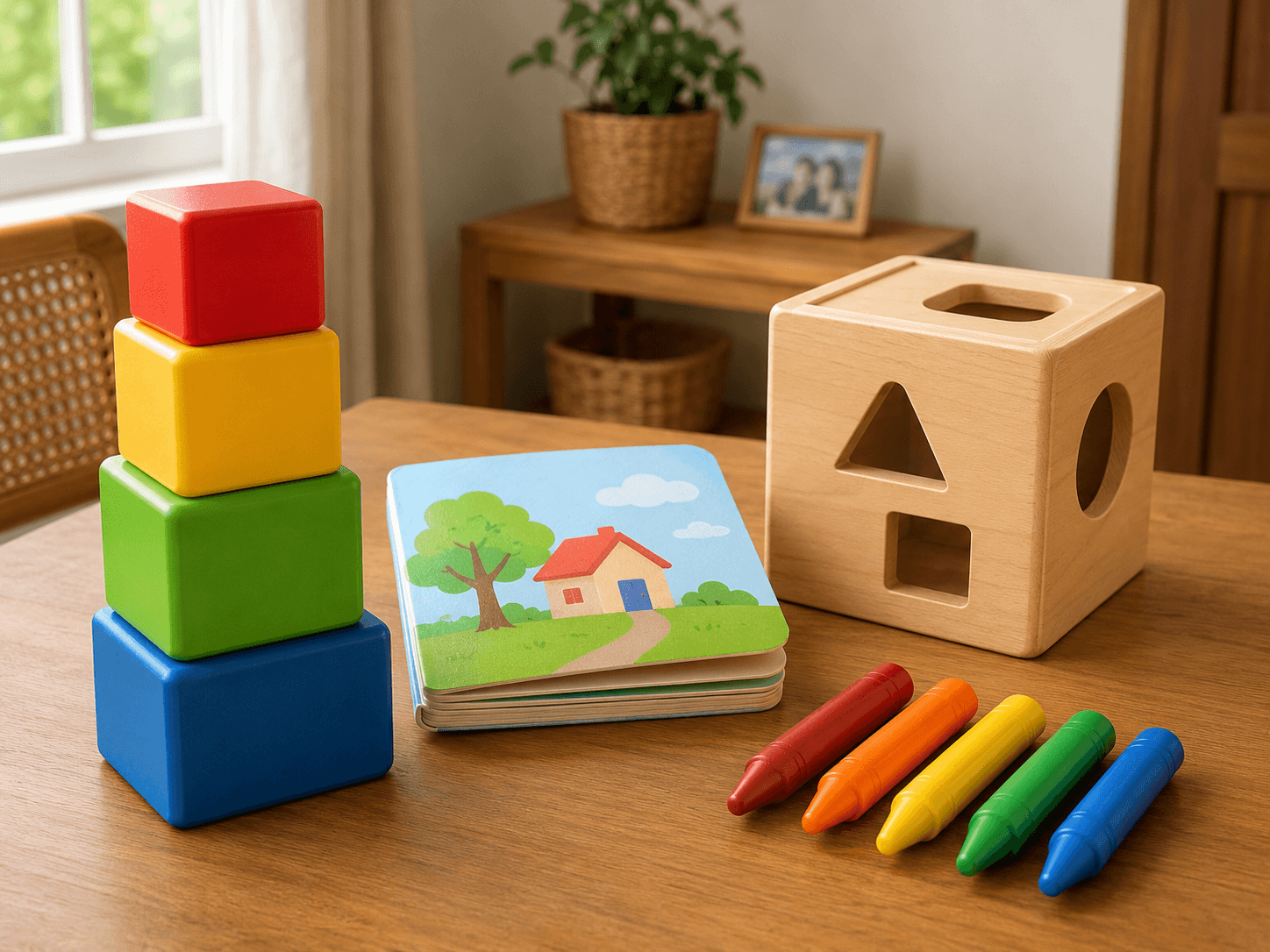
| Babies | soft cloth books, rattles, large soft blocks, teething toys, washable plush toys |
| 1–2 years old | stacking cups, large blocks, push toys, board books, simple shape sorters |
| 2–3 years old | large-piece puzzles, pretend-play toys, chunky crayons, musical toys, sorting toys |
| 3–5 years old | building blocks with larger pieces, pretend-play sets, art materials, beginner board games |
| 6 years and up | more detailed construction sets, sports toys, science kits, craft kits, supervised electronic toys |
Remember: these are general ideas only. Always check the label and supervise based on your child’s age and behavior.
Quick toy safety checklist for parents
Before buying or giving a toy to your child, ask:
- Is this toy right for my child’s age?
- Does it have small parts?
- Does it have sharp edges?
- Can it break easily?
- Are the batteries secure?
- Does it have loose magnets?
- Is it easy to clean?
- Does it have safety warnings?
- Is the seller reputable?
- Can my child use it safely with supervision?
If you are not sure, choose a simpler and sturdier toy. Mas okay nang basic pero safe kaysa fancy pero risky.
Frequently Asked Questions
What toys should I avoid for toddlers?
Avoid toys with small parts, sharp edges, loose batteries, small magnets, long cords, weak plastic, peeling paint, or pieces that can easily break. For toddlers, bigger and simpler toys are usually safer.
Are cheap toys safe for children?
Some affordable toys can be safe, but not all cheap toys are well-made. Check the label, seller, materials, small parts, battery compartment, and overall construction. Sulit means safe and useful, not just cheap.
Are battery-operated toys safe?
Battery-operated toys can be safe if the battery compartment is secure and cannot be opened easily by a child. Avoid toys with loose battery covers, missing screws, or accessible button batteries.
Are magnetic toys safe for kids?
Magnetic toys may be appropriate for older children if the magnets are securely enclosed and the toy is used properly. Avoid magnetic toys for young children if small magnets can come loose or be swallowed.
How often should I check my child’s toys?
Check toys regularly, especially during cleanup or before giving old toys to younger children. Remove broken, rusty, cracked, sharp, or dirty toys that may no longer be safe.
What is the safest toy for young children?
There is no single safest toy for every child, but good options for young children are usually large, sturdy, washable, age-appropriate toys without small detachable parts, loose batteries, or sharp edges.
Final Thoughts
Choosing safe toys for your child does not have to be complicated. Start with the basics: check the age label, avoid small parts for young children, inspect the toy’s quality, secure batteries, avoid loose magnets, and buy from sellers you trust.
The best toy is not always the most expensive or most popular one. The best toy is safe, age-appropriate, useful, and enjoyable for your child.
Hindi kailangan marami agad ang toys. A few safe, sturdy, and meaningful toys can already support your child’s play and learning at home.
For more practical parenting articles, visit our Parenting Guides for Filipino Moms page.
You may also find related toy and product articles in our Family Reviews section.
What Should Parents Put in a Healthy Baon for School Kids?

What Do Geniuses Have In Common?
Stages of Motor Skills Development in Infants
About Author

PinayMom
Margot is the voice behind PinayMom, where she shares practical parenting guides, mom-life tips, family reviews, seasonal Philippine guides, and family travel stories from a Filipino family perspective.